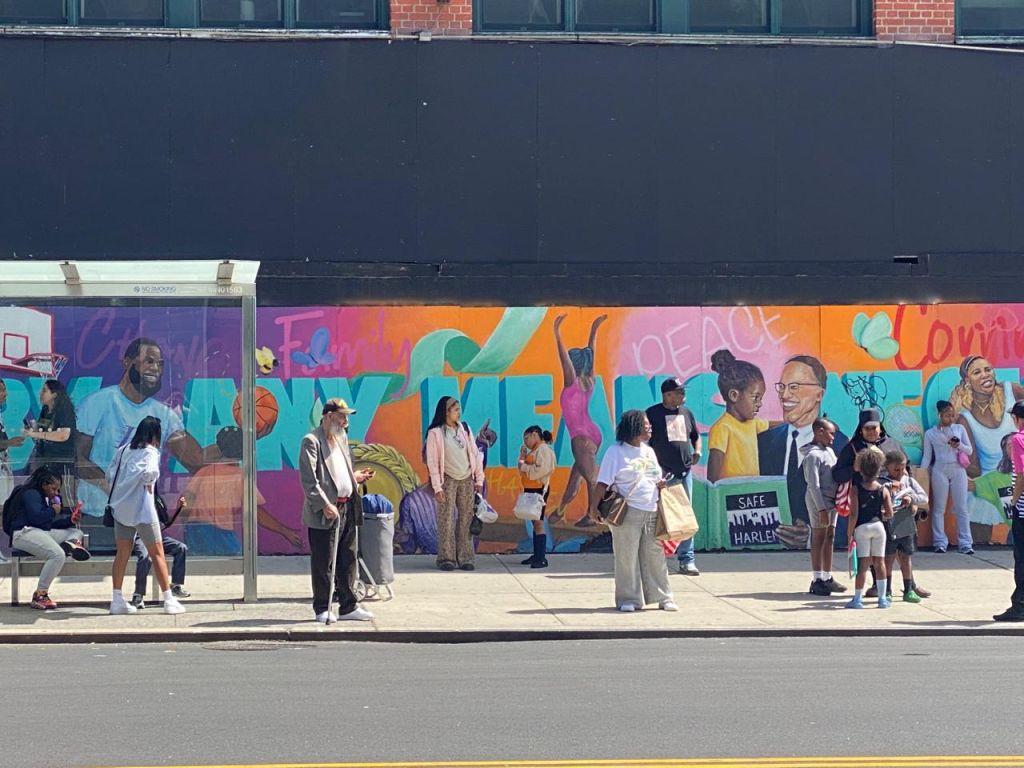
Near Central Harlem’s 125th Street, where many of the outbreaks sprang. (Credit: Karthik Vinod)
Submitted for my master’s thesis project at Columbia Journalism School. Edited by Professor Kat Chow.
In 2017, Kevin Hanlon was admitted to a New Jersey hospital with pneumonia. He had cancer at the time, but nothing prepared Hanlon, or his doctors, for what came next. His condition deteriorated rapidly. Kevin couldn’t breathe, and was placed on IV antibiotics. But by then it was too late. Kevin died from Legionnaires’ disease.
“It’s horrible if you become sick from Legionnaires’,” Gwen Hanlon, Kevin’s spouse said. The couple also had two children. “It’s a horrible, horrible way to die.”
In the nine years since Kevin’s death, Gwen has been haunted by the possibility that it might have been avoidable. Days before he fell ill, Kevin had received treatment for his lung cancer at Memorial Sloan Kettering Cancer Center in New York City.
When Hanlon later learned that Legionnaires’ disease spreads through aerosolized water – from cooling towers, plumbing systems, fountains, even hospital infrastructure — she began to wonder whether her husband had been exposed while seeking care in New York City.
In a typical year, New York City typically sees between 200 and 400 cases of Legionnaires’ disease. It is caused by inhaling aerosolized droplets of water contaminated with the bacteria, legionella pneumophila. The bacteria thrives in warm, stagnant water and in biofilms – greasy bacterial colonies that line the inside walls in traditionally old pipes.
But with steady maintenance, legionnaires’ disease is preventable. While cooling towers have been the most notorious source for outbreaks, they are far from the only one. Plumbing systems, hot-water tanks, decorative fountains, and large public water systems can all harbor legionella bacteria if they aren’t disinfected properly. Older adults, smokers, and people with compromised immune systems, are particularly vulnerable to legionnaires’ disease.
“To find out it’s preventable just still blows my mind,” Hanlon said. “You’re worried about plastic bags, recycling plastics. All of those things are really important, and keeping our water clean, drinkable, safe for everybody should be a given. It’s part of humanity, right? Shelter, water and food.”
Hanlon, who is now a victim’s advocate with the Alliance to Prevent Legionnaires’ Disease, attends water summits, where leading experts from public health, the and scientific community convene to discuss best practices and address challenges in ensuring safe quality water supply. She takes time out to lobby legislators, and speaks to communities experiencing outbreaks.
Last summer, Central Harlem served as the epicenter for New York City’s worst Legionnaires’ outbreak in over a decade. The city recorded over a hundred cases of legionnaires’ disease. Ninety people were hospitalized, and seven people had died.
Hanlon, who is White, saw her own story repeating, but this time in a predominantly Black neighborhood already burdened by disinvestment, poor health outcomes, and aging infrastructure. Seven people died this time.
While legionella outbreaks in mostly Black and Brown neighborhoods have received little attention in other cities across the United States, in New York City, the outbreak exposed cracks in its existing legal framework, amid declining inspections into cooling towers systems, enforcement loopholes, aging infrastructure, and a trust deficit between public-health officials and the communities most at risk. Residents were left questioning whether the existing legal frameworks help them at all.
“Seven of our neighbors died”
At a town hall meeting last December at the ARC A. Philip Randolph Older Adult Center on West 146th Street, it was mostly elderly residents who packed the venue to hear city health officials explain their response to last summer’s outbreak.
The outbreak in late July and early August rivaled the 2015 one in the South Bronx, which left more than 130 people sick and killed 12.
The audience broke into applause when Corrine Schiff, the deputy environmental health commissioner announced a recent surge in hirings of community health workers and water ecologists. For residents in Harlem, the toll has been intimate and devastating.
Kim Smith, a longtime Harlem community advocate, helped organize the event. She co-founded the Harlem Legionnaires’ Task Force, following last summer’s outbreak to disseminate information regarding the disease to residents.
Last summer, Smith had spent weeks fielding calls from grieving neighbors. “Seven of our neighbors died from a disease that’s preventable,” she said. “Even right now, I feel like I want to cry.”
Residents, survivors and victims’ family members served the city with legal notices and lawsuits for wrongful negligence. Representatives of survivors and victims, who caught Legionnaires’ disease, declined to provide comments for this story given ongoing litigation. But Smith’s frustration runs deeper than legislation. She makes it a point to tell elected officials she meets that, “We really don’t need new legislation if the legislation that’s already on the books is followed.”
Laws on the books, failures in practice
Lawmakers proposed new mandates meant to regulate cooling towers after the 2015 South Bronx outbreak. Back then, city investigators traced the source to poorly maintained cooling towers – many atop city-run facilities, including hospitals. The political response was swift. That same year, the City Council passed Local Law 77, requiring building owners to register cooling towers, inspect them regularly, and test for legionella every three months.
Health experts describe New York’s regulatory framework as one of the strongest in the country. Local Law 77 mandated registrations of cooling towers across the city, and penalties for non-compliance. State codes require water-management plans. Hospitals are required to test their cooling towers every 90 days.
Yet when investigators examined the Central Harlem outbreak, at least 12 cooling towers across the neighborhood tested positive for Legionella. Seven of the ten contaminated buildings in five ZIP codes were city-run.
By August, the city health department traced the outbreak to two buildings. One of these was a construction site, hosting an unregistered cooling tower on site, in violation of the 2015 mandate imposed following the Bronx outbreak. The building contractor, Skanska USA, is a Swedish-multinational company, constructing a public health laboratory, envisioned to be the city’s first line of defence for the community against a future pandemic outbreak. Ironically, the site was grounds for an outbreak itself.
The other building implicated was Harlem Hospital Center, a city-owned facility serving a predominantly Black and low-income population. In June, just a month before the outbreak, the hospital’s cooling towers had passed inspections.
After the cluster was identified, Dr. Mitchell Katz, president of NYC Health + Hospitals, insisted publicly that authorities had followed all required procedures. In his telling, the system had worked as designed.
But not everybody is convinced. “You would think a city-owned building would be ultra-compliant [with testing rules],” Dr. Donald Weiss, a physician and the city’s former disease surveillance director, said in an interview. “I don’t think that was the case.”
Dr. Weiss, who spent years as an epidemiologist overseeing disease tracking for New York City, was particularly critical of Dr. Katz’s public statements made in the immediate aftermath. “He spoke ignorantly of what was going on. He didn’t even know what was happening and wanted to push the blame elsewhere.”
In response to Dr. Weiss’ allegations, NYC Health + Hospitals defended Dr. Katz’ earlier statements. “NYC Health + Hospitals’ highest priority is the health and safety of our patients, staff, and the communities we serve, which is why we adhere to one of the most rigorous cooling tower maintenance programs and inspection protocols in the country,” the email statement from spokesperson, Adam Shrier, read.
“As both NYC Health + Hospitals and the NYC Department of Health have stated previously, Harlem Hospital was in full compliance with city requirements before, during, and after the Central Harlem cluster investigation. We remain committed to rigorous oversight and continuous improvement to safeguard our facilities and the health of all New Yorkers.”
The limits of inspection
Experts contend it matters whether inspections are properly done.
Cooling-tower systems may inject biocides, or chemical disinfectants, several times a day, but key parameters like turbidity and pH are not always continuously monitored. Treatments that work in spring may lose effectiveness during the peak summer heat.
“The city may recommend chlorination or hyper-halogenation,” said Janet Stout, a professor and microbiologist at the University of Pittsburgh, and director at the Special Pathogens Laboratory. Stout is one of the country’s leading Legionella researchers. “But is it actually done?”
Samples should be collected before chemical treatment. Otherwise, building owners can evade scrutiny, collecting samples after disinfecting the source; rendering the purpose behind conducting inspections pointless, thus creating a loophole in the mandate. “That loophole is big enough to drive a yacht through,” said Stout.
But inspections weren’t done on a regular basis. At the time of the outbreak in Central Harlem, the city health department employed just 12 water ecologists, all of whom Stout said were hired in response to the 2015 South Bronx outbreak. This was until a few weeks ago when a hiring spree began.
According to a report in Gothamist, only 1,200 cooling towers in the city were inspected in the first half of 2025 – down from about 5,000 during the same period in 2017.
Following the summer outbreak, the city council required inspections and reporting results every 30 days under the bill, Intro 1390. The legislation is slated to come into effect in May.
At the regulatory level, gaps remain. ASHRAE 188, a national standard adopted in 2015, outlines responsibilities for managing building water systems, preventing legionella growth. However, neither Local Law 77, nor these building standards mandate routine testing for building water supply. It draws upon a 2007 World Health Organization assessment, which states testing falls within building owners’ duties. In practice, compliance varies widely.
Health department’s complicity
At the height of the outbreak, the city health department refused to release ZIP-code-level information about where cases were concentrated.
Once the city closed its investigation into the outbreak, the City Council held a hearing in September. Speaker Adrienne Adams challenged the health department’s approach.
Adams pressed Michelle Morse, the city health commissioner, on the city’s decision to withhold information residents needed to protect themselves and raised concerns about the timeline of the response, noting that detailed information emerged nearly three weeks after the outbreak was first reported in late July.
Morse defended her decision, explaining that the department waited for confirmatory evidence from genomic testing that could link cases to specific cooling towers. “I do believe we have made the right decision about releasing the life-saving information in the way we did,” she said.
Growing legionella cultures and sequencing them to establish genetic matches is a biochemical process that can take up to two weeks. Releasing incomplete or preliminary information on the cooling tower locations, Morse argued, risked misdirecting resources and public attention.

Kim Smith (right), with the city health department officials, including Corrine Schiff (left) Michelle Morse (second from left), seated at the town hall meeting. (Credit: Karthik Vinod)
Morse said that releasing ZIP codes could create a false sense of security elsewhere, leading residents outside those areas to underestimate their risk. Instead, the department opted for broad warnings urging vigilance across Harlem. “The last thing I would want is anyone in Central Harm to think they aren’t at risk when they are,” she said.
Health experts agreed the approach was epidemiologically cautious. Janet Stout of the Special Pathogens Laboratory, who is also a microbiologist and one of the country’s foremost Legionella researchers, described the health department’s approach as “prudent” and “conservative.”
Casting a wide net during outbreaks, she said, helps ensure cases aren’t missed. From a purely epidemiological standpoint, caution can save lives.
Still, even defenders of the department acknowledge that risk communication often exposes fault lines between public-health institutions and the communities they serve.
“Environmental health has been informed by decades of right-to-know and right-to-act,” said Chris Boyd, a former city public-health official who oversaw the 2015 Bronx outbreak response. “Environmental justice efforts and communicable disease divisions operate from very different approaches to public health.”
Residents by and large shared the view that the health department’s messaging made them feel like passive recipients of risk rather than partners in prevention.
Last September, Cameron Clarke, a medical student at Columbia University who also represents Harlem’s District 9 on the community board and helps lead its health committee, brought local residents together. They met with WE ACT for Environmental Justice and the Upper Manhattan Tenants Union to talk about how to prevent future disease outbreaks.
They floated ideas that ranged from training residents as water ecologists to conducting independent sampling and holding negligent building owners financially responsible for victims’ medical bills.
Underlying these proposals was dissatisfaction with the city’s response to the South Bronx outbreak from a decade ago, shaped by years of perceived opacity and delayed action. In a written testimony to the city council in September, he wrote, “Communities like ours cannot continue to live in fear of stepping outside our homes because the air we breathe may carry a preventable disease.”
Clarke, in an interview, described the city’s communication as “garbled” and “confused,” amplifying panic rather than reducing it. He noticed inconsistencies in the ZIP codes listed in LinkNYC kiosks stationed at Central Harlem, and those cited in press briefings.
But Clarke also raised a practical concern that aerosolized legionella does not respect ZIP-code boundaries. Cooling-tower plumes can travel hundreds of meters, carried by air currents that make neighborhood borders meaningless.
Such airborne routes represent a risk even tenant associations have raised. Last August, Joel Kupferman, who runs the Environmental Justice Initiative (EJI), wrote a letter to city legislators detailing suspected ways legionella could travel through the air and infect passerbies. “Studies indicate that wastewater treatment plants are much more likely to cause Legionnaires’ disease outbreaks rather than sporadic cases,” the letter read.
The letter, co-signed with human rights lawyer Barbara Olshansky, implored that the city health department investigate the Wards Island Wastewater Treatment Plant, as a potential source spreading legionella pneumophilia. Kupferman hasn’t heard a response yet.
While Kupferman and Olshansky’s concerns are based on assertions in scientific literature, Stout said, “I think it would be the exception rather than the rule.”
Infrastructure, inequality, and risk
Legionella outbreaks don’t strike evenly across the city. Instead, they’re recurrent in particular parts of the city. According to city surveillance data, Central Harlem experiences the highest incidence rate in Manhattan: about 12 cases per 100,000 residents, and among the highest in the city overall.
Harlem reports higher than citywide averages of asthma hospitalizations, obesity, hypertension and diabetes. Chronic disease increases susceptibility. The use of aging pipes and boilers in public housing developments exacerbates that risk.
“There is only a start to tracking the racial and economic characteristics of Legionnaires’ disease,” Chris Boyd, the former city public health official, said. “This issue is ripe for intervention — but that requires transparency, accountability, and a real desire to address underlying causes.”
Those causes dominated discussion at the town hall meeting in December, organized by the Harlem Legionnaires’ Task Force.
One of the designated speakers on the day, Victoria D. Lynch, a postdoctoral researcher in environmental health sciences at Columbia University, praised organizers for injecting urgency into a problem long treated as episodic rather than systemic.
Lynch situates Legionnaires’ disease within a broader ecological context. Research over two decades shows strong seasonality, with outbreaks peaking in summer, and links to stagnant water, aging infrastructure, and environmental disruptions like flooding. Climate change, she argues, is likely to intensify all of these risk factors.
But two drivers loom largest in Harlem: baseline health and infrastructure quality. High chronic-disease rates increase susceptibility, while neglected buildings allow bacterial amplification. “This is an indicator of structural injustice,” Lynch said. “This isn’t happening forty blocks south on the Upper East Side.”
“It still blows my mind”
Gwen Hanlon of the Alliance for the Prevention of Legionnaires’ Disease believes legionella must be treated from the source itself – the public water distribution supply. She pushed New Jersey legislators to adopt a “source-to-tap” approach to water safety — treating legionella not as an episodic outbreak issue, but as a systemic infrastructure problem. The state passed legislation last year.
Hanlon advised survivors from the Central Harlem outbreak to share their stories with elected representatives, so the city could act against Legionnaires’. In New Jersey, Hanlon advocated for the local senate to pass a bill last year, to curb legionella growth in water systems in a source-to-tap policy. Likewise, she suggests New York City follow in their footsteps.
“They are way behind,” Hanlon said. “They still have their citizens dying from Legionnaires ten years later. Nothing has changed. It’s gotten worse. It’s getting worse.”
In recent years, elected officials have passed a series of city- and state-level bills aimed at curbing Legionella clusters in residential buildings and public water systems.
New York City council member Pierina Ana Sanchez introduced bill 434 which calls for a plan to “minimize the growth and transmission of Legionella bacteria.”
The bill was supported by plumbing associations across the city, including the NYC Plumbing Foundation, which in a written testimony to the City Council, cited an Association of Water Technologies report to state, “domestic (potable) water plumbing systems are responsible for an even larger number of cases of legionellosis.”
However, the bill hasn’t been passed since it was tabled in February 2024. Following the outbreak in Central Harlem, elected representatives have rushed to table bills addressing cooling tower certifications, inspections in locations where Legionella’s Disease has had a history of, and policies to implement a source-to-tap policy for ridding legionella from water supply.
Hanlon praised elected representatives from New York State, especially Senator Linda Rosenthal, for pushing through with the bill.
Janet Stout echoed similar concerns as Hanlon about expanding the focus beyond cooling towers. “Let’s not just talk about cooling towers,” she said. “What about all of those buildings? There’s hundreds of them in your vision. Half of them have legionella in their building water systems and nobody’s doing anything about it.”
In a ballpark estimate, Stout has estimated that about 50% of the public water distribution system contains Legionella. This is not inherently unusual, since the bacteria commonly occur in freshwater. The risk emerges when legionella-laden water is aerosolized.
Joel Kupferman, who also represents the local tenant association at Central Harlem’s St. Nicholas Houses, said the apartment super-complex has seen Legionella cases go uninvestigated by the city health department for years.
Under Department of Buildings guidelines, the health department launches an investigation only if at least two Legionella cases are reported in a building.
But the city did conduct sporadic investigations of apartments, often identifying water-heating systems as the culprit, Tyrone Ball, the former president at St. Nicholas Houses’, said.
Officials advised St. Nicholas Houses to replace its roughly 70-year-old pipes with newer ones – a process that is now underway. Legionella can grow inside water pipes, forming biofilms in which protozoans consume the bacteria and aid their proliferation.
Legionella cases in places like St. Nicholas Houses have gone uninvestigated for years, Joel Kupferman, the former attorney, who represents tenant associations in NYCHA developments across Harlem and the Bronx including St. Nicholas’, said.
City guidelines require investigations only when two cases are reported in a single building.
In January, an apartment complex at 3333 Broadway reported two cases of Legionnaires’ disease to the city health department. “We don’t know how or where these tenants contracted the disease,” a spokesperson for the building property, managed by Urban American, replied in an e-mail statement.
“While there is no indication the cases originated from our building, the [city health] Department requires testing of both the Tower A and B water systems because they share a hot water distribution system.”
The spokesperson said they’re working in lockstep with the health department, promising to offer updates in the future.
Meanwhile, residents were advised not to use showers. The move has left them in limbo, as Gothamist reported, amidst the heavy chilly winters in New York City, which have been the chilliest the place has ever been in recent years.
The Harlem Legionnaires’ Task Force, who was involved in meeting residents at 3333 Broadway, recently sent out an e-mail, with job posting for community health advocates.
“The Harlem Legionnaires’ Task Force (HLTF) is committed to staying abreast of all things Legionnaires’ within our community, including opportunities to participate in the process of conducting crucial community outreach to keep us informed,” the email from co-founder, Kim Smith, read.
At the sidelines of last December’s town hall meeting, Smith was bullish on their effort’s prospects to bridge the divide between public health officials and the community, on being informed of legionella developments.“I don’t have a fear of a repeat,” she said. “We’re doing the work to ensure that there’s not another outbreak.”


Leave a Reply